


Marine Animals & Ocean Themes A Lovely Guide to the Wonders Beneath the Waves

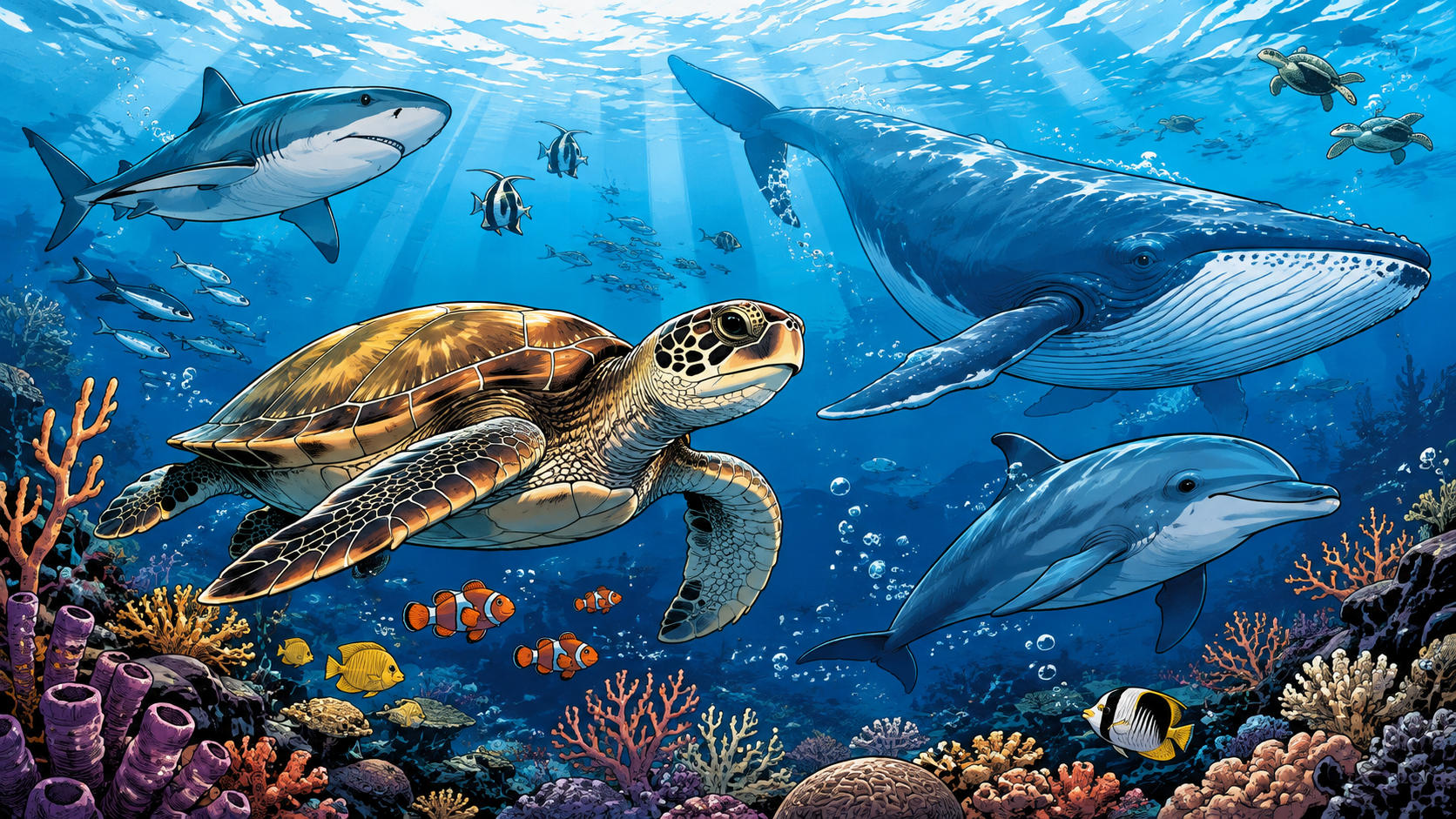
The ocean is one of Earth’s most beautiful mysteries. Beneath the sparkling surface is a world filled with graceful sea turtles, playful dolphins, colorful fish, enormous whales, fascinating octopuses, and countless other marine animals. 🌊 From shallow tropical reefs to the darkest parts of the deep sea, ocean life has developed remarkable ways to survive, communicate, hunt, travel, and protect itself.
Marine animals are not simply beautiful creatures to admire. They are essential parts of healthy ocean ecosystems, and their lives are closely connected with the health of our planet. Learning about ocean animals can help us appreciate the incredible biodiversity of the sea and understand why protecting marine habitats matters.
Whether you love ocean photography, marine biology, beach adventures, underwater exploration, or simply enjoy discovering fascinating animals, the marine world offers something wonderful for everyone. Let’s dive into the blue and explore some of the most captivating creatures and ocean themes on Earth. 🐋
🐬 Dolphins, Whales, and the Wonderful World of Marine Mammals
Marine mammals are among the most recognizable and beloved ocean animals. Dolphins and whales belong to a fascinating group of creatures that spend their lives in the water but breathe air through lungs. Their adaptations allow them to travel enormous distances, communicate with one another, and survive in environments ranging from warm tropical waters to freezing polar seas.
Dolphins are especially famous for their intelligence, playful behavior, and social nature. Many species live in groups called pods, where individuals cooperate while traveling, feeding, and protecting one another. Dolphins also use echolocation to navigate their underwater environment. By producing sounds and interpreting returning echoes, they can detect objects and locate prey even when visibility is poor. 🐬
Whales offer another spectacular example of marine adaptation. The blue whale, for instance, is the largest known animal to have ever lived on Earth. Despite its enormous size, it primarily feeds on tiny organisms called krill. Other whales have different feeding strategies, migration patterns, and social behaviors. Humpback whales are particularly famous for their complex songs and spectacular movements.
Marine mammals also remind us that the ocean is a connected environment. A whale traveling across an ocean basin can encounter many different ecosystems during its lifetime. Changes in water temperature, food availability, pollution, fishing activity, and habitat conditions can therefore influence marine mammals across enormous distances.
The beauty of these animals is matched by their ecological importance. Their movements and feeding activities can influence marine food webs and nutrient cycling. Protecting whales, dolphins, and other marine mammals requires protecting the broader ocean environment on which they depend. Their stories show us that the health of individual species and the health of the ocean are deeply connected.
🐢 Sea Turtles, Sharks, and Remarkable Ocean Survivors
Some marine animals have become symbols of resilience and survival. Sea turtles and sharks are two outstanding examples, although they represent very different branches of marine life.
Sea turtles have existed for millions of years and are perfectly adapted to life in the ocean. Their streamlined bodies and powerful flippers allow them to travel through the water efficiently, while their ability to navigate across vast distances remains one of their most fascinating characteristics. Different sea turtle species occupy different ecological niches. Some feed primarily on seagrasses, while others consume jellyfish, sponges, or other marine organisms.
The life cycle of a sea turtle is equally remarkable. Females return to beaches to lay their eggs, often traveling great distances to reach suitable nesting areas. After hatching, young turtles make their way toward the ocean and begin an uncertain journey through a complex marine environment. 🐢 Their survival depends on healthy beaches, productive coastal ecosystems, and safe ocean habitats.
Sharks have their own extraordinary evolutionary history. These cartilaginous fish have existed for hundreds of millions of years and have developed an incredible range of body shapes, hunting strategies, and ecological roles. The great white shark, whale shark, hammerhead shark, and reef shark are very different animals despite sharing the familiar shark body plan.
Sharks are often portrayed only as dangerous predators, but this view overlooks their ecological importance and diversity. Many shark species occupy important positions in marine food webs and can influence the abundance and behavior of other animals. The whale shark, despite being the largest fish in the world, is a gentle filter feeder that consumes plankton and other tiny organisms.
These animals demonstrate that the ocean is full of surprises. A tiny hatchling turtle can undertake a remarkable migration, while a massive whale shark can peacefully filter microscopic food from the water. 🌊 Their different survival strategies make marine ecosystems richer, more balanced, and endlessly fascinating to explore.
🐙 Coral Reefs, Octopuses, and the Colorful Life Beneath the Surface
Few ocean environments are as visually spectacular as coral reefs. Often called the rainforests of the sea, coral reef ecosystems provide shelter and feeding grounds for an extraordinary variety of marine animals. Bright tropical fish, sea stars, crustaceans, mollusks, sea turtles, reef sharks, and countless microscopic organisms can all be part of this intricate underwater community.
One of the most fascinating reef inhabitants is the octopus. 🐙 With flexible bodies, highly developed nervous systems, sophisticated camouflage abilities, and remarkable problem-solving skills, octopuses are among the most intriguing animals in the marine world. They can change the appearance of their skin to blend with their surroundings, communicate visual signals, and manipulate objects using their arms.
Coral reefs themselves are living ecosystems. Reef-building corals are animals that form relationships with microscopic algae, and these relationships help support the productivity and extraordinary biodiversity associated with many reefs. The complex physical structure created by coral colonies provides hiding places, nursery areas, and feeding opportunities for other organisms.
Color is one of the most memorable features of reef life. Angelfish, butterflyfish, clownfish, parrotfish, wrasses, and countless other species display patterns that can help them communicate, camouflage themselves, attract mates, or confuse predators. 🐠 Looking at a healthy coral reef can feel like discovering an underwater garden filled with movement and color.
Yet coral reef ecosystems are sensitive to environmental changes. Increasing ocean temperatures, pollution, physical damage, sedimentation, and other pressures can affect coral health and the animals that depend on reefs. Protecting reefs therefore means protecting an entire community rather than focusing on one species alone.
The reef reminds us of a beautiful ecological truth: every creature has a place in the larger story. A small fish seeking shelter among coral branches, an octopus hiding beneath a rocky ledge, and a sea turtle passing overhead are all connected through the same living environment.
🌊 Why Ocean Conservation Matters for Every Marine Animal
The ocean may seem impossibly large, but marine ecosystems are not immune to human activities. Plastic pollution, habitat destruction, overfishing, climate change, underwater noise, and other pressures can affect marine animals and the environments they need to survive.
Ocean conservation begins with understanding. When people learn why sea turtles need nesting beaches, why coral reefs support biodiversity, why sharks matter to food webs, and why whales depend on productive marine habitats, the ocean becomes more than a distant blue space. It becomes a living system worth protecting. 💙
One of the most important ideas in marine conservation is ecosystem protection. Saving one species can be valuable, but long-term conservation also requires protecting habitats and ecological relationships. Seagrass meadows, mangrove forests, coral reefs, rocky shores, open oceans, and deep-sea environments all support different communities of life.
Small choices can also contribute to a larger conservation culture. Reducing unnecessary plastic use, disposing of waste responsibly, respecting wildlife while traveling, choosing sustainable seafood where reliable information is available, and supporting responsible marine education can all help create greater awareness of ocean health.
Responsible wildlife tourism is especially important. Wild marine animals should be observed without chasing, touching, feeding, or otherwise disturbing them. A beautiful encounter is most meaningful when the animal remains safe and free to behave naturally.
There is also enormous value in education. Children who discover the wonder of dolphins, turtles, sharks, whales, and colorful reef fish may develop a lifelong interest in science and conservation. Adults can deepen that appreciation through documentaries, museums, responsible travel experiences, marine research, and local conservation projects.
🌎 The ocean connects continents, climates, species, and communities. What happens in one part of the marine environment can influence life elsewhere. Protecting ocean ecosystems is therefore not simply about preserving beautiful scenery. It is about maintaining one of Earth’s most important life-support systems.
Every marine animal has a story, from the smallest plankton drifting with ocean currents to the largest whale crossing vast stretches of blue water. By learning those stories, we can become better observers, more responsible travelers, and stronger advocates for a healthier ocean.
The next time you see waves rolling toward a beach, imagine the incredible world beneath them. There may be turtles traveling through seagrass, fish moving through coral, dolphins communicating within their pod, or enormous whales traveling far beyond the horizon. 🐋🌊 The ocean is not empty space it is a vibrant, living world, and its beauty is worth discovering and protecting.
#MarineAnimals #OceanAnimals #MarineLife #OceanWildlife #OceanConservation


 Clothes
 Tote Bag
 Canvas & Poster
 Drinkware
 Ceramic Ornaments
 Anime Style
 Mother’s Day
 Father’s Day
 Halloween
 Christmas


